Table of Contents
The Indian Super League (ISL) has fundamentally altered the trajectory of football in India. Since its inception, it has transitioned from a high-profile tournament featuring aging global stars to a robust, competitive league that serves as the backbone of the Indian national team. This transformation has not only captivated millions of domestic fans but has also placed Indian football on the global map.
History and Foundation of the Indian Super League
Launch of the ISL in 2014
The Indian Super League was officially launched on October 21, 2013, by IMG-Reliance, Star Sports, and the All India Football Federation (AIFF). However, the inaugural season kicked off in October 2014. The primary objective was to make football a premier sport in India—a country traditionally dominated by cricket—and to provide Indian players with exposure to international standards of training and competition.
Founding Clubs and Franchise Model
Initially, the ISL operated on a closed-franchise model, similar to the MLS in the United States or the IPL in cricket. Eight cities were chosen to host the founding franchises:
- Atletico de Kolkata (now Mohun Bagan SG)
- Kerala Blasters FC
- FC Goa
- Mumbai City FC
- FC Pune City (defunct)
- Delhi Dynamos (now Odisha FC)
- NorthEast United FC
- Chennaiyin FC
These clubs were backed by a mix of Bollywood celebrities, cricket legends, and major corporate houses, ensuring immediate media attention and financial viability.
Merger with the I-League and League Recognition
For several years, India had two parallel leagues: the ISL and the older I-League. Following a roadmap brokered by the Asian Football Confederation (AFC), the ISL was eventually recognized as the top-tier league in India. This led to a strategic merger of sorts, where legacy clubs like Mohun Bagan and East Bengal eventually joined the ISL, bringing with them nearly a century of footballing history and millions of passionate supporters.
For fans following these historic matchups, accessing the Mostbet (with the official site) provides a comprehensive platform to track live scores and odds across all Indian football divisions.
Competition Format and Structure
Regular Season Format
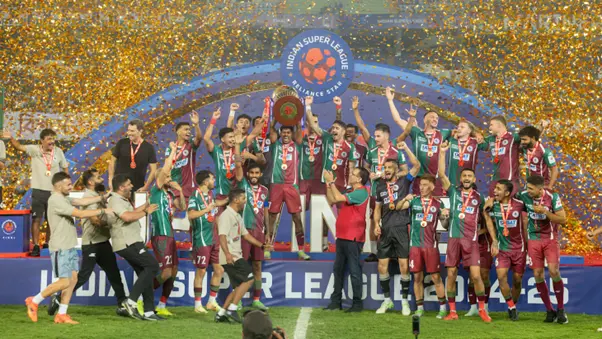
The ISL typically runs from September to May. Unlike the early seasons which were short “sprint” tournaments, the modern ISL follows a double round-robin format. Each team plays every other team twice—once at home and once away. Points are awarded in the standard fashion: three for a win, one for a draw, and zero for a loss. At the end of the league stage, the team finishing at the top of the table is crowned the League Assembly Winners and receives the ISL Shield.
Playoffs and ISL Final
The top six teams from the regular season qualify for the playoffs. The structure is designed to maximize drama:
- Eliminators: Teams ranked 3rd to 6th play single-leg matches to determine who moves to the semi-finals.
- Semi-finals: Played over two legs (home and away).
- The Final: A single-match showdown to determine the ISL Champions.
Qualification for AFC Competitions
Success in the ISL provides a gateway to continental football. The ISL Shield winners (League stage toppers) earn a prestigious spot in the AFC Champions League 2 group stage, allowing Indian clubs to test their mettle against the best teams from Japan, South Korea, and Saudi Arabia.
To stay updated on these international fixtures and manage your betting slips on the go, the Mostbet official app offers a seamless mobile experience for football enthusiasts.
Teams and Clubs in the ISL
Current Participating Clubs
The league has expanded from its original eight teams to a more comprehensive national competition. As of the current season, the league features 13 clubs representing diverse geographical regions of India.
List of Current ISL Teams (2024-25):
- Mohun Bagan Super Giant
- East Bengal FC
- Mumbai City FC
- Bengaluru FC
- Kerala Blasters FC
- FC Goa
- Hyderabad FC
- Chennaiyin FC
- Odisha FC
- NorthEast United FC
- Jamshedpur FC
- Punjab FC
- Mohammedan SC
Most Successful Teams in ISL History
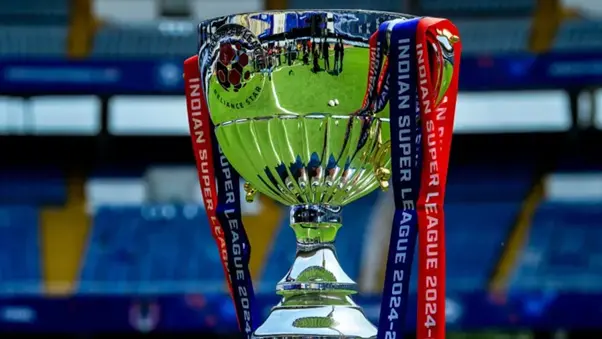
Success in the ISL is measured by both the ISL Trophy (Playoff winners) and the ISL Shield (League winners).
| Club | ISL Cups (Playoffs) | ISL Shields (League) | Key Era |
| ATK / Mohun Bagan SG | 4 | 1 | 2014-2024 |
| Mumbai City FC | 2 | 2 | 2020-Present |
| Chennaiyin FC | 2 | 0 | 2015-2018 |
| Bengaluru FC | 1 | 1 | 2017-2019 |
| Hyderabad FC | 1 | 0 | 2021-2022 |
Major Rivalries and Derbies
The heartbeat of the ISL lies in its rivalries. The most significant is the Kolkata Derby between Mohun Bagan SG and East Bengal FC. This rivalry dates back over 100 years and regularly attracts over 60,000 fans to the Salt Lake Stadium. Another intense rivalry is the South Indian Derby between Kerala Blasters, Bengaluru FC, and Chennaiyin FC, characterized by loud, colorful traveling fan groups.
Players and Development
International Stars in the ISL
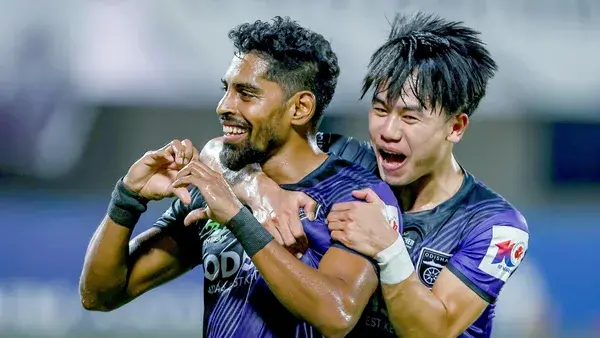
In its early years, the ISL was famous for “Marquee Players.” Legends like Alessandro Del Piero, Roberto Carlos, Diego Forlan, and Robert Pires graced the league. While the focus has shifted toward younger, more functional foreign players, the league still attracts high-quality talent from the Spanish La Liga and the Australian A-League.
Emerging Indian Talents
The real success of the ISL is the rise of Indian players. Stars like Lallianzuala Chhangte, Sahal Abdul Samad, and Liston Colaco have become household names. The league provides a platform where local players train alongside international veterans, significantly improving their tactical awareness and physical conditioning.
Youth Development and Grassroots Impact
Every ISL club is mandated to have a youth development program.
- Reliance Foundation Development League (RFDL): A reserve league that helps transition U-21 players to the senior team.
- Grassroots Festivals: Clubs organize local scouting camps to find talent in rural areas.
- Mandatory Squad Rules: Clubs must include a minimum number of developmental players (U-23) in their matchday squads.
Media Coverage and Popularity
Broadcasting and Global Reach
The ISL is broadcast in multiple languages (English, Hindi, Bengali, Malayalam, etc.) to cater to India’s diverse population. Internationally, the league is streamed in over 80 countries, reflecting the growing interest in the “sleeping giant” of world football.
Fan Base and Stadium Attendance
The Kerala Blasters and Mohun Bagan consistently lead the league in attendance, often creating atmospheres that rival European leagues. The “Manjappada” (Kerala’s yellow army) is recognized globally for its passionate displays and tifo culture.
Commercial Growth and Sponsorship
The commercial value of the ISL has surged. With title sponsors like Hero and now Indian Oil, the league has attracted global brands. For those interested in the analytical side of the game and the commercial betting landscape, reading a detailed Mostbet review can provide clarity on how the league is perceived by sports analysts and betting markets.
Current Season and Future Outlook
Title Contenders and Key Players
The current season is one of the most competitive yet. Mumbai City FC and Mohun Bagan SG continue to lead the pack with their massive budgets and star-studded squads. However, the rise of Punjab FC and the consistency of FC Goa have made the race for the Top 6 incredibly tight.
Key Players to Watch:
- Dimitrios Petratos (MBSG): A clinical finisher and playmaker.
- Lallianzuala Chhangte (MCFC): The reigning Indian Player of the Year.
- Adrian Luna (KBFC): The creative engine of the Kerala Blasters.
Recent Champions
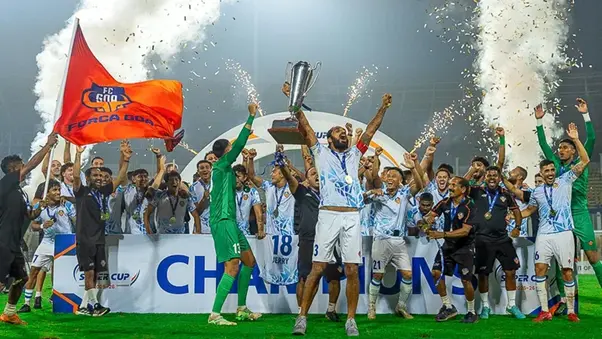
The last few seasons have seen a rotation of power. Mumbai City FC won the “Double” (Shield and Cup) in 2020-21, while Mohun Bagan SG secured the Shield in the 2023-24 season after a dramatic final-day victory.
Future Plans and Expansion of the League
The AIFF and FSDL (Football Sports Development Limited) aim to expand the league to 16 teams in the coming years.
- Promotion/Relegation: The introduction of sporting merit-based promotion from the I-League is a major step toward a traditional European-style league pyramid.
- Infrastructure: New dedicated football stadiums are being planned in cities like Kolkata and Hyderabad.
- Technical Standard: A focus on improving the quality of refereeing and the implementation of VAR (Video Assistant Referee) in a cost-effective “VAR-lite” format.
The Indian Super League has successfully moved past its “infancy” stage. It is no longer just a spectacle; it is a sustainable ecosystem that fuels the dreams of millions of young Indians. As the league continues to grow, it remains the primary catalyst for India’s ambition to qualify for the FIFA World Cup.